Why your business may need its own website
You do not always need a large website. A clear, manageable site can support customers who first hear about you through referrals, social media or Google.
In this article
Short answer
A website gives you your own place to explain your services, process and contact options. A compact site can be enough if it is clear, works well on mobile and helps visitors find the next step.
Key points
- A first website can be small while still having sound foundations.
- Structure, mobile use, speed, content management and SEO basics matter from the start.
- Social media, reviews and Maps can create interest. A website gives people more room to assess the business.
You may already get customers through your network, social media, Google Maps or referrals. That does not automatically mean you need a large website. It does make it worth considering whether people have a clear place to understand what you do, why it fits them and how to contact you.
A useful website needs more than a domain
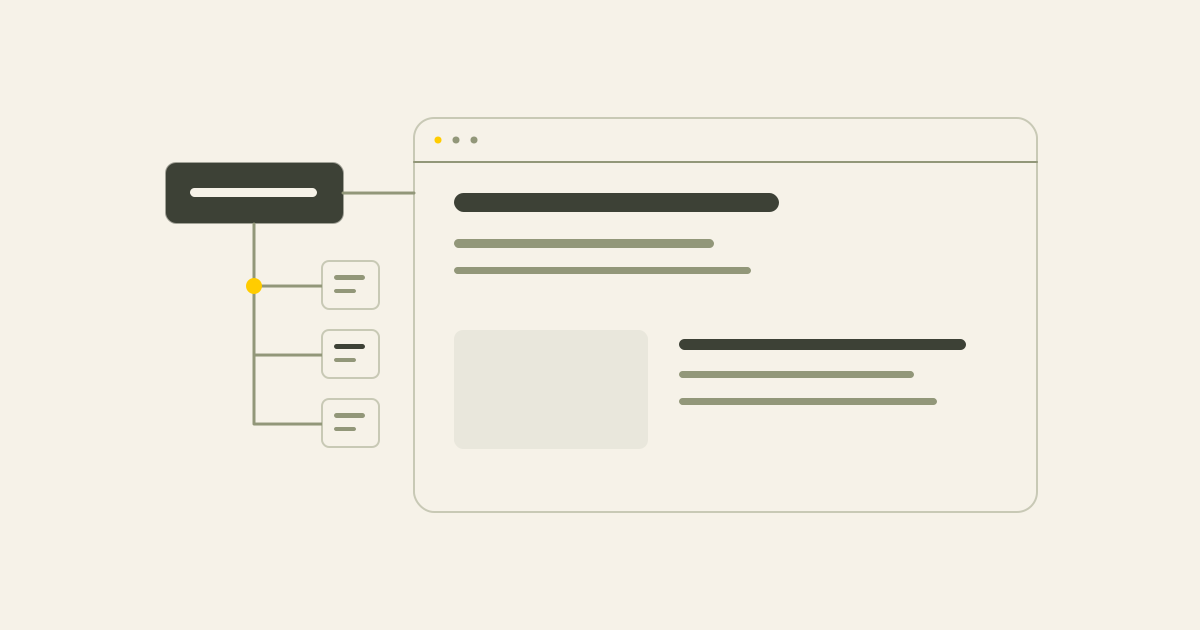
For a first business website, I look at the page structure, service explanations, mobile experience, technical setup and SEO foundations. Content management matters too: you should understand which information you can change yourself.
The site does not need to be large. It should be clear now and allow sensible additions later.
- A clear page structure
- Usable mobile pages and sensible loading speed
- An SEO foundation
- Agreed content-management features
- A straightforward contact route
- Room for relevant future pages
People already use the web to research businesses
Published figures give context, but they do not prove demand for every service. DataReportal's Digital 2027 report gives 18.3 million internet users and 99.0% internet penetration for the Netherlands in October 2026. The report title refers to 2027, while this measurement is from October 2026. These are Dutch figures, not a UK estimate or evidence of search demand for your service.
The cited Eurostat material reports that 78% of EU internet users bought or ordered goods or services online in 2025. A separate Eurostat release reported 94% for Dutch internet users in 2024. Neither figure should be presented as a UK estimate or proof that a particular service business sells online.
The practical question is more specific: what do your customers need to check online before they decide? Use real customer questions and available search data to answer that.
Give people somewhere useful to go after reading reviews
Positive reviews may create interest without answering every question. Someone may still want to understand who is behind the business, whether the offer fits and how the work is arranged.
The cited BrightLocal 2026 survey of 1,002 US adults reported that 54% would visit a business website after positive reviews and 66% would do more research. Those percentages describe that US sample. They are not estimates for Dutch or UK customers.
The useful lesson is to make the website clear for people who arrive after a recommendation or review.
Help people compare their options
Imagine someone comparing two providers. One has a short external profile. The other also offers clear service information, answers to practical questions and an easy contact route.
The second provider has given the reader more information for the decision. A website does not prove that the business is better, but good explanations can reduce uncertainty.
Start with a compact website where appropriate
Many sole traders and small service businesses can start with a focused website. The right size depends on the offer and the questions customers need answered.
A useful foundation makes later additions easier, such as distinct service pages, cases, articles or genuinely relevant location information.
What belongs on a first website?
Start with the information that helps someone decide whether to contact you. Not every business needs every item as a separate page.
- A clear explanation of the business
- Important services and who they are for
- About the person or business
- Accurate contact details and a next step
- Location or service area where relevant
- Useful answers to common questions
- Real cases or reviews you may use
- An appropriate privacy statement
- Agreed tools for managing content
Bring SEO into the early decisions
It is often more efficient to consider URLs, headings, page titles, internal links, loading, mobile use and content structure during the build. Otherwise, later SEO work may have to correct the underlying setup first.
That does not mean every website package includes a full research or monthly SEO programme. The included foundation and any extra research are set out in the proposal.
For a compact first website, explore the starter website package. For an existing site, read about technical SEO and local SEO.
Conclusion
A website is most useful when its content, technical setup and contact route help real customers. Start at a size that suits the business and agree a foundation you can manage and extend.
Common questions
Does every sole trader need a website?
It depends on the business and how customers choose a provider. A compact site can be a useful place to explain the offer and contact options.
Is Instagram enough?
It may be an effective channel, but you depend on its rules and format. A website gives you more control over content, structure and the route to contact.
Can a Business Profile work without a website?
Yes, for eligible businesses. A website adds room for detailed services, your process and contact options.
Can I start small?
Yes. Focus on useful content, mobile use, technical foundations and a clear next step.
What should the first site include?
Explain the business, key services, contact details and next step. Add relevant process information, cases and answers where they help.
Why plan SEO from the start?
It lets page structure, titles, internal links and the technical setup work together before launch.
Can I expand later?
Yes. A well-planned foundation can support relevant service pages, cases, articles and additional SEO work.
Sources
This article uses the following external sources.
Author
Timothy Hartog, SEO specialist and web designer at Hartog Growth.